
 Home
Home Products
 Lab Reports
 News
News How To Pay
 FAQ
FAQ Contact Us
 About Us
Injectables, RhinoUGL, Steroid
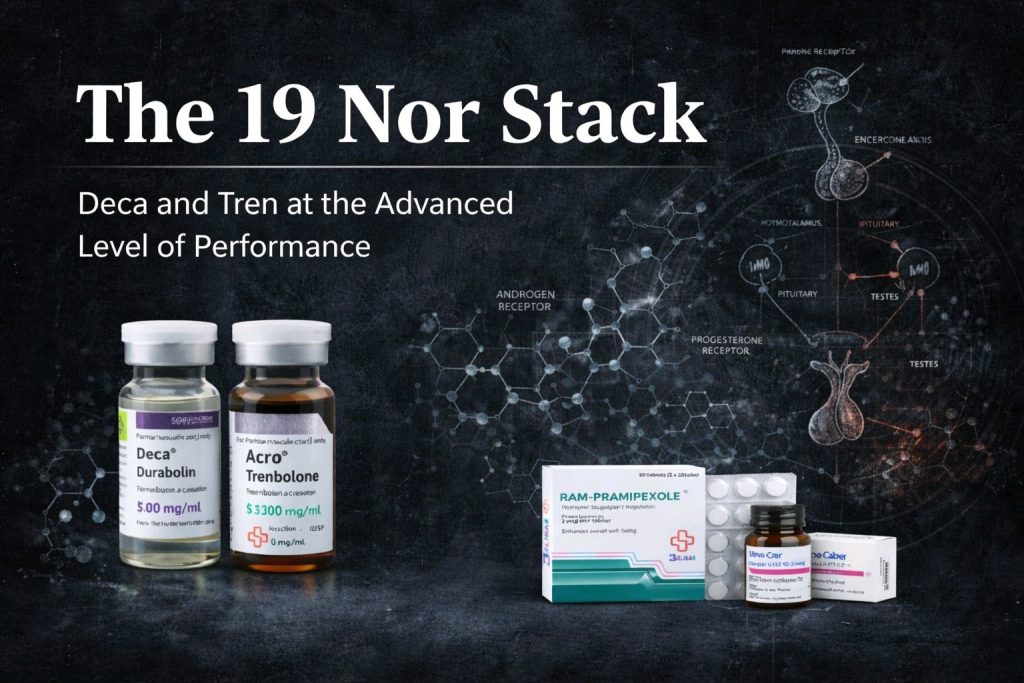
The 19 Nor Stack: Deca and Tren at the Advanced Level of Performance
Feb
In performance circles, certain combinations generate more discussion than others.
One of the most debated is Nandrolone decanoate and Trenbolone acetate.
Both are 19-nor compounds, sharing a similar structure but very different effects in the body. Understanding the biology behind them explains why advanced users focus on this pairing — not as a recommendation, but as a concept in endocrine complexity.
The 19 Nor Foundation
Both nandrolone and trenbolone are derived from 19-nortestosterone.
This structural change alters how they interact with hormone receptors.
They both:
-
Bind strongly to the androgen receptor
-
Activate the progesterone receptor
-
Fully suppress natural testosterone production
-
Influence prolactin signaling under certain hormonal conditions
They do not raise circulating progesterone levels. They stimulate the receptor itself, which explains much of their unique behavior.
Nandrolone Decanoate
The Steady 19 Nor
Nandrolone decanoate is a long-ester compound. Its release is gradual, producing a slower rise and decline in hormone levels.
Key points:
-
Moderate aromatization
-
Lower CNS stimulation
-
Gradual tissue accumulation
-
Longer recovery timeline
Its slower kinetics make it a steady compound, but it also requires a longer recovery after discontinuation.
Trenbolone Acetate
The High-Intensity 19 Nor
Trenbolone acetate is short-ester and fast acting.
It does not aromatize, yet its high androgen receptor and progesterone receptor activity have strong systemic effects.
Key points:
-
Rapid peak levels
-
Strong CNS stimulation
-
Increased sympathetic activity
-
Noticeable impact on sleep and recovery
Trenbolone is intense. Its effects extend beyond muscle tissue into cardiovascular and neurological pathways.
Why Advanced Users Discuss the Combination
The theoretical rationale centers on layered receptor activation:
-
Nandrolone provides a steady anabolic base
-
Trenbolone delivers aggressive androgenic drive and nutrient partitioning
On paper, this is synergy.
In reality, it increases systemic complexity. Two progestogenic androgens at the same time amplify receptor activity and endocrine suppression. More signaling equals more demand.
Progesterone, Estrogen, and Prolactin
Both compounds activate the progesterone receptor.
When estradiol is elevated, this can influence prolactin activity in some individuals.
Important distinctions:
-
Prolactin elevation is not automatic
-
Estradiol imbalance often drives symptoms
Prolactin is regulated by dopamine at D2 receptors in the pituitary. Medications like Cabergoline and Pramipexole are used clinically for diagnosed hyperprolactinemia.
They lower prolactin via dopamine receptors. They do not reduce progesterone, block progesterone receptors, or correct estrogen imbalance. They require medical oversight and should never be assumed as needed without lab confirmation.
What Increases at the Advanced Level
Layering two 19-nor compounds increases more than just anabolic signaling:
-
Hormonal suppression
-
Cardiovascular strain
-
HDL reduction
-
Hematocrit elevation
-
Blood pressure load
-
CNS stress
Trenbolone alone is potent. Adding another suppressive androgen increases recovery complexity and systemic demand. Precision becomes essential.
Bloodwork Is Essential
When multiple endocrine pathways are manipulated, objective data is critical.
Markers advanced users evaluate include:
-
Serum prolactin
-
Sensitive estradiol
-
Total and free testosterone
-
SHBG
-
Lipid panel
-
Hematocrit
-
Liver enzymes
Symptoms without lab confirmation often lead to misinterpretation and unnecessary interventions. Precision separates informed decisions from reckless stacking.
Final Perspective
The 19 Nor Stack is discussed because of theoretical synergy.
The reality is that receptor activity and systemic stress rise together.
Nandrolone and trenbolone share structural DNA but produce very different neurological and cardiovascular demands.
At the advanced level of performance, understanding the full hormonal environment matters more than simply adding compounds.
Control the system first. Then evaluate the outcome.
